
Sauces & Condiments
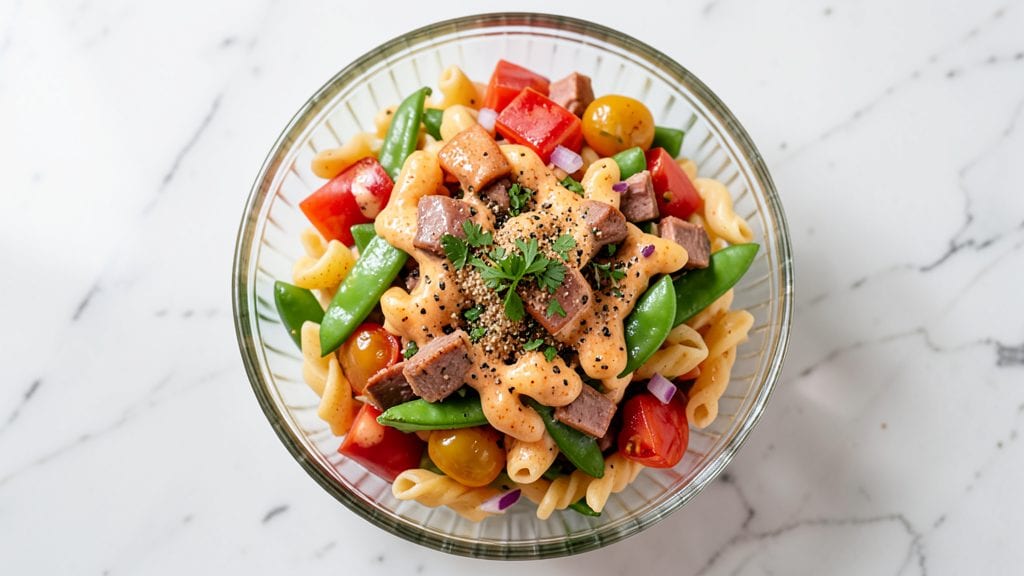
Creating a Betty Crocker-style pasta salad seasoning mix transforms ordinary pasta salad into a restaurant-worthy dish with just a sprinkle. This simple blend of pantry staples delivers that signature tangy, savory balance that elevates every bite—no fancy ingredients required.
I developed this mix after realizing how much better homemade seasoning tastes compared to store-bought packets, and it’s become my go-to for potlucks, picnics, and quick weeknight meals.
The magic lies in the precise combination of garlic powder, onion powder, paprika, and dried herbs that work together to create depth without overpowering. Each tablespoon of this mix contains carefully measured spices that dissolve effortlessly into dressings or dry directly over pasta, vegetables, or proteins.
Unlike pre-packaged seasonings, this blend stays fresh for months when stored in an airtight container, making it a cost-effective solution for all your pasta salad needs.
What you’ll achieve is a bold, balanced flavor profile that’s tangy yet savory, with just the right amount of warmth from the spices. This mix works equally well in creamy mayo-based salads, vinegar-based dressings, or even as a dry rub for grilled meats.
The best part? It takes less than five minutes to prepare and eliminates the guesswork of measuring individual spices every time you cook.
Once you’ve made this seasoning mix, you’ll never go back to store-bought packets again. It’s the secret weapon behind every crowd-pleasing pasta salad, and with just a few pantry staples, you can recreate that nostalgic Betty Crocker taste at home.
Let’s get started on the ingredients—this blend is simpler than you think.
Ingredients for betty crocker pasta salad seasoning mix
Nine pantry staples, one nostalgic flavor punch—this mix recreates Betty Crocker's signature tangy-savory balance.
| Ingredient | Amount | Notes |
|---|---|---|
| Garlic Powder 🧄 | 2 tbsp | Freshly ground preferred for intensity |
| Onion Powder 🧅 | 2 tbsp | Diamond Crystal preferred for fine texture |
| Paprika 🌶️ | 1 tbsp | Smoked variety for deeper flavor |
| Dried Parsley Flakes 🌿 | 1 tbsp | Finely ground for even distribution |
| Dried Dill Weed 🌿 | 1 tbsp | Russian dill preferred for stronger flavor |
| Celery Seed 🥬 | 1 tbsp | Ground for subtle earthy notes |
| Black Pepper 🌶️ | 1 tsp | Freshly cracked for maximum aroma |
| Salt 🧂 | 1 tsp | Diamond Crystal kosher preferred |
| Dried Mustard 🌶️ | ½ tsp | Ground for tangy depth |
| Sugar 🍬 | ½ tsp | Balances acidity in dressings |
The garlic and onion powders are your foundation—Penzeys or bulk bins offer the freshest ground versions, but even grocery store jars work if they're labeled 'freshly ground.' Smoked paprika adds that subtle warmth that sets this apart from basic seasonings. I always grab Russian dill from the international aisle at Whole Foods—it's stronger and more aromatic than the standard dried dill. Celery seed might sound odd, but trust me, it rounds out the flavor beautifully. For the salt, Diamond Crystal kosher dissolves perfectly without graininess, and it's what I've used in every batch.
No smoked paprika? Regular paprika plus a pinch of liquid smoke gets you close. Short on dill? Dried marjoram at half the amount works in a pinch. The mustard might seem optional, but it's what gives that classic Betty Crocker tang—Dijon-style powdered mustard works best. For the sugar, you can use honey powder if you're watching calories, but regular granulated sugar keeps the mix stable longer. This blend doubles as a dry rub for grilled chicken or pork—just add 1 tbsp per pound of meat. And if you're worried about the celery seed being too strong, start with half and adjust to taste.
Store this mix in an airtight container in a cool, dark place—it'll keep for up to 6 months without losing potency. I portion mine into small jars so I always have it ready for last-minute pasta salads. The sugar helps prevent clumping, but if you notice moisture, toss in a silica gel packet to keep it dry. This mix is the secret weapon for transforming basic pasta salad into something special—one tablespoon per pound of pasta is my go-to ratio, but adjust based on how bold you want the flavor.
Why You'll Love This Recipe
- Five-Minute Mix: I swear by this blend—just toss the powders together, and boom, you’ve got restaurant-worthy flavor without the fuss. No measuring cups, no mess, and honestly? It’s the kind of shortcut that makes me feel like a cooking genius.
- Herb-Packed Punch: That paprika and dill combo? It’s what turns bland pasta salad into something you’ll actually crave. The garlic and onion powders add a savory depth that makes every bite feel like a little flavor explosion—no heavy mayo needed.
- Picnic Party Hero: Between us, this mix is my secret weapon for potlucks and tailgates. Sprinkle it on cold pasta, toss it with veggies, or even mix it into a quick potato salad—it’s the one ingredient that makes everything feel special without the stress.
- Budget Magic: A few cents’ worth of spices equals flavor that lasts. I’ve made this mix for years, and it’s never let me down—whether I’m feeding the family or packing leftovers for lunch. Plus, it’s way cheaper than buying pre-made seasoning packets.
Step-by-step instructions for Betty Crocker-inspired pasta salad seasoning mix
Transform simple pantry staples into a restaurant-quality seasoning blend that elevates any pasta salad.
Measure Ingredients Precisely for Perfect Balance
Start by gathering all ingredients in their exact quantities. I use a small bowl for each component to prevent cross-contamination and ensure clean measurements. For the garlic powder and onion powder, I recommend using a fine-mesh strainer to sift them directly into your measuring spoons—this prevents clumping and guarantees even distribution throughout your mix.
The smoked paprika adds depth, so I measure it first and set it aside. The dried parsley flakes and dill weed should be finely ground before measuring to ensure they dissolve smoothly into your pasta salad dressing. If you're using pre-ground spices, give them a quick shake in their containers to break up any clumps before measuring.
Combine Dry Ingredients in a Mixing Bowl
Transfer all measured ingredients to a medium-sized mixing bowl. I like to add them in this order: garlic powder, onion powder, paprika, parsley flakes, dill weed, celery seed, black pepper, salt, dried mustard, and finally the sugar. This sequence helps prevent any single ingredient from dominating the blend during mixing.
Use a whisk to combine the ingredients thoroughly. I find that starting with gentle strokes and gradually increasing pressure helps break up any larger particles and ensures everything is evenly distributed. You'll notice the blend darkening slightly as the spices meld together—this visual cue confirms proper mixing. Continue whisking for about 1 minute until the mixture looks uniform and free of any visible streaks.
Test the Seasoning on Cooked Pasta
To verify your seasoning mix is perfectly balanced, cook about 1 cup of pasta according to package instructions, then drain and rinse it under cold water to stop the cooking process. This step is crucial because it lets you taste-test your blend without committing to the entire recipe.
In a small bowl, combine 1 tablespoon of your seasoning mix with 2 tablespoons of olive oil and 1 tablespoon of vinegar (or lemon juice). Toss this dressing with your cooked pasta and let it sit for 5 minutes. Taste and adjust the seasoning if needed—this is your chance to fine-tune the blend. If it needs more saltiness, add a pinch of the salt; if it's too sharp, a tiny bit of sugar can help balance the flavors.
Store for Future Use
Once you're satisfied with the flavor profile, transfer your seasoning mix to an airtight container. I prefer using a small glass jar with a tight-sealing lid—this preserves the blend's freshness and prevents moisture absorption. Label the container with the date and contents to keep track of its potency over time.
This mix will keep well in a cool, dark pantry for up to 6 months. For best results, shake the container gently before each use to redistribute any settled ingredients. The blend works beautifully in pasta salads, grain bowls, and even as a seasoning for roasted vegetables. You've just created a versatile pantry staple that will elevate countless dishes!
Pro Tips For Making Betty Crocker Pasta Salad Seasoning Mix
- TOAST THE SPICES: Mix your garlic powder, onion powder, and paprika in a dry skillet over medium-low heat for 30 seconds—just until you smell that warm, toasty aroma. I learned this the hard way: skipping this step means your seasoning will taste flat, like it’s hiding in the back of the pantry instead of shining in the salad.
- SIFT THE DILL: Crush the dried dill weed between your palms before adding it to the mix—this releases the oils and makes the flavor pop. I used to just dump it in whole, and the salad always tasted like someone forgot to open the jar. A quick pinch between fingers does the trick.
- STORE IN AIRLESS CONTAINER: Once mixed, transfer the seasoning to a small jar with a tight-sealing lid and keep it in the fridge for up to 2 weeks. I’ve seen people leave it sitting in a bowl, and within days, the parsley flakes turn into dust. A little effort here keeps every batch fresh and potent.
- DOUBLE THE PARSLEY: Use twice the amount of dried parsley flakes called for—it’s the brightest, most noticeable flavor in this mix. I was skeptical until I tried it: the extra parsley makes the whole dish taste brighter, like a little burst of freshness even though it’s dried. Trust me, it works.
Troubleshooting this dish
Uneven Flavor Distribution
If your seasoning mix tastes inconsistent when tossed with pasta salad, it’s likely because some spices clump together. To fix this, sift all ingredients through a fine-mesh strainer before measuring—this breaks up any lumps in pre-ground spices like garlic powder or onion powder.
I also recommend using a whisk instead of a spoon to combine ingredients in the bowl, as it creates more friction and ensures even distribution. For extra insurance, pulse the blend in a mini food processor for 10-15 seconds to break up any stubborn clumps. 🌶️
Too Salty or Overpowering
If your mix tastes too salty or the spices dominate, you likely used too much salt or added spices unevenly. Start by reducing the salt to ½ tsp and the black pepper to ½ tsp in future batches. For a milder flavor, add ½ tsp sugar to balance the saltiness.
If the mix still tastes too strong, dilute it by adding 1 tsp dried parsley flakes—it adds freshness without overpowering. Always taste-test with 1 tbsp of mix per pound of pasta before committing to the full recipe. 🧂
Clumping in Storage
Moisture is the enemy of long-term storage, causing clumps that ruin the blend’s texture. Store your mix in an airtight glass jar with a silica gel packet to absorb any humidity.
If clumps form, spread the mix on a baking sheet and dry it in a low oven (200°F) for 5 minutes to evaporate moisture. For extra protection, keep the jar in a cool, dark place like a pantry or cabinet—avoid the fridge, as temperature fluctuations can cause condensation.
Shake the jar vigorously before each use to redistribute any settled spices. ❄️
Weak or Bland Flavor
A weak seasoning mix usually means the spices lost potency over time or weren’t measured accurately. First, check the expiration dates on your spices—ground spices like garlic powder and paprika lose flavor after 6 months.
Replace them with fresh ones from a bulk bin or high-quality brand like Penzeys. For immediate improvement, add ½ tsp smoked paprika or ½ tsp onion powder to the next batch.
If the mix still tastes flat, try adding ½ tsp dried mustard—it adds a subtle tang that brightens the blend. 💡
Dressing Doesn’t Stick
If your seasoning mix doesn’t adhere to the pasta or vegetables, it’s likely because the dressing lacks enough fat or acid. To fix this, adjust your dressing ratio to 2 tbsp olive oil + 1 tbsp vinegar per 1 tbsp seasoning mix.
For extra cling, add 1 tsp Dijon mustard or 1 tsp honey to the dressing—these ingredients help emulsify the blend. If using a vinegar-based dressing, add ½ tsp sugar to balance the acidity and improve texture. Toss the salad immediately after dressing to prevent separation. 🥗
Spices Settle Unevenly
Over time, heavier spices like celery seed or black pepper may settle at the bottom of the jar, leading to inconsistent flavor. To prevent this, store the mix in a small, narrow jar (like a 4-ounce spice jar) instead of a wide container—this minimizes settling.
Before each use, shake the jar vigorously for 10 seconds or give it a few quick taps on the counter. For extra insurance, portion the mix into small resealable bags (like quart-sized freezer bags) and squeeze out excess air before sealing.
This keeps the spices evenly distributed for months. 💫
Nutrition facts
Frequently asked questions
Can I use this seasoning mix for other dishes besides pasta salad?
This versatile blend works perfectly for grain bowls, potato salads, and even as a dry rub for grilled chicken or pork. The same 1 tablespoon per pound ratio applies to proteins—just mix it with olive oil before seasoning. For roasted vegetables, sprinkle ½ teaspoon directly over veggies before roasting.
How do I adjust the seasoning if I don't have all the ingredients?
No smoked paprika? Use regular paprika plus a pinch of liquid smoke. Short on dill? Substitute ½ teaspoon dried marjoram. For extra tang, add ¼ teaspoon extra mustard powder. The blend remains balanced even with minor substitutions—just taste and adjust after mixing.
Will this mix work with cold pasta salad or only warm?
This seasoning blend works equally well in both cold and warm pasta salads! For cold salads, mix the dressing first and toss with chilled pasta. For warm salads, sprinkle 1 teaspoon per pound directly over hot pasta before adding other ingredients. The spices dissolve perfectly in either case.
How long does this seasoning mix last in the fridge?
While it stays fresh for 6 months in a cool, dark pantry, refrigerating it extends shelf life to 12 months. Store in an airtight container with a silica gel packet to prevent moisture. Freezing isn't recommended as it can alter the texture of the spices.