
Main Courses
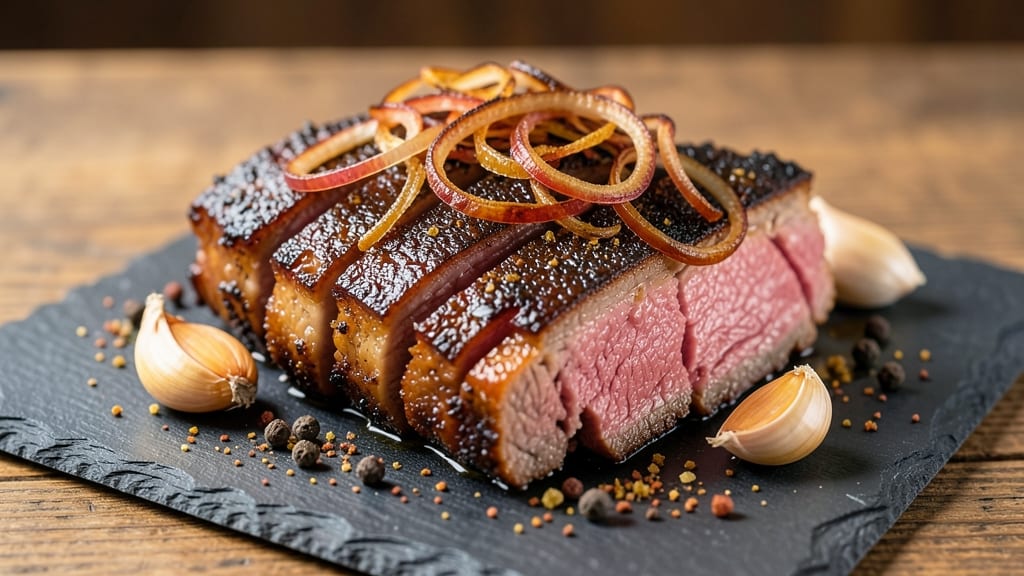
This bison brisket recipe transforms a leaner cut into melt-in-your-mouth perfection with a slow-smoked spice rub that sticks to every bite. Honestly, I was skeptical about bison brisket—leaner than beef, shorter cook times—but this method proves it’s the star of your next dinner table.
The secret? A bold rub that caramelizes beautifully and a cooking approach that respects bison’s unique tenderness.
What makes this recipe special is how it handles bison’s natural leanness—no dry meat here. You’ll start with a simple but powerful spice blend, sear the brisket to lock in juices, then slow-cook until it practically falls apart.
The key is patience: 195–203°F internal temp ensures that tender, stringy texture we all crave, without the guesswork. And because bison cooks faster than beef, you’ll have dinner ready in half the time of a traditional brisket.
By the time you slice into that brisket, you’ll get perfectly tender, juicy meat with a crusty, flavorful bark from the rub. The aroma alone will have everyone gathering around the table—smoky, spiced, and irresistible.
Serve it with roasted potatoes or caramelized onions, and you’ve got a meal that feels like a celebration, not just dinner. Let’s get cooking!
Fair warning: This recipe requires 8–10 hours of hands-off time (or overnight in the oven), but the payoff is worth it. The brisket rests while you sleep, waking up to a meal that’s worth every minute. Trust me, your taste buds—and your guests—will thank you.
Ingredients for bison brisket
Six ingredients for the rub, four for the cook—simple but bold for melt-in-your-mouth bison brisket.
| Ingredient | Amount | Notes |
|---|---|---|
| Bison Brisket 🦬 | 4 lb | Whole packer cut, trimmed of excess fat |
| Yellow Onion 🧅 | 1 whole | Large, sliced into 1/4-inch pieces |
| Garlic Cloves 🧄 | 8 cloves | Fresh, peeled and minced |
| Kosher Salt 🧂 | 2 tbsp | Diamond Crystal preferred |
| Freshly Ground Black Pepper 🌶️ | 1 ½ tbsp | Coarse grind for texture |
| Smoked Paprika 🌶️ | 1 tbsp | For deep smoky flavor |
| Ground Cumin 🌿 | 1 ½ tsp | Toasted for richer aroma |
| Ground Coriander 🌿 | 1 tsp | Adds citrusy depth |
| Mustard Powder 🍯 | ½ tsp | For subtle tang |
| Brown Sugar 🍬 | 1 tbsp | Light, for caramelization |
| Apple Cider Vinegar 🍏 | 2 tbsp | For tenderizing and tang |
| Beef Broth 🍲 | 1 cup | Low-sodium preferred |
| Unsalted Butter 🧈 | ½ cup | Cold, for basting |
| Fresh Thyme 🌿 | 2 sprigs | For aromatic finish |
The bison brisket is the star, so look for packer cuts—they’re leaner but pack incredible flavor. Costco or specialty butchers like Snake River Farms carry high-quality bison briskets, often pre-trimmed for convenience. If you’re buying whole, trim any thick fat cap to about 1/4-inch—enough to render flavor but not so much it makes the meat greasy. The brisket should be a deep, vibrant red, not grayish or slimy. For the spices, Penzeys or bulk bins at natural grocery stores ensure freshness—spices lose potency fast once opened, so buy small amounts if you won’t use them all.
No smoked paprika? Regular paprika plus a pinch of liquid smoke works in a pinch, though it’s not quite the same. Fresh thyme unavailable? Dried thyme at one-third the amount gets you close, but fresh is worth the extra minute to snip. The beef broth can be swapped for water plus 1 tbsp Worcestershire sauce if you’re out, but the umami makes a difference. For the brown sugar, turbinado or coconut sugar adds a slightly different depth. And if you’re short on time, pre-mix the dry rub and store it in an airtight container for up to 3 months—just add the wet ingredients when ready to cook.
This brisket reheats beautifully—wrap tightly in foil and warm in a 300°F oven for 20 minutes. It keeps for 4-5 days in the fridge, though the flavor only gets better as it rests. For leftovers, slice thinly against the grain and serve on toasted buns with caramelized onions. Freeze portions in airtight containers for up to 3 months, but thaw overnight in the fridge for best results. The rub mixture itself? Store the dry portion in a jar for up to 6 months—just add wet ingredients when ready to use.
Why You'll Love This Recipe
- Five-Ingredient Magic: I swear, that’s it—just bison, onion, garlic, salt, and pepper. No fancy rubs or hours of marinating. The brisket practically cooks itself while you chop one onion and mince a few cloves. Honestly, I’ve made this on nights when I forgot to defrost anything else.
- Crispy-Creamy Payoff: Between us, the slow cook transforms that tough brisket into something tender with a crust so good you’ll want to eat it with a spoon. The onions caramelize right into the meat, and that garlic? It lingers just enough to make every bite feel like a hug.
- Weeknight or Weekend Star: Throw it in the slow cooker before work, and by dinner, you’ve got a meal that feels special—no stress. (Yes, even on a Tuesday night.) It’s the kind of dish that works for a quiet family dinner or a rowdy game-day spread without extra effort.
- Leftovers That Don’t Lie: I’ve reheated these slices three times, and they’re still better than takeout. The brisket stays juicy, the flavors deepen, and honestly? It’s the only protein I buy in bulk because it’s cheaper than beef and stretches farther. Win-win.
Step-by-step instructions for slow-smoked bison brisket
Here's how to transform tough bison brisket into melt-in-your-mouth perfection with bold, smoky flavors.
Prepare and Season the Bison Brisket
Start by trimming the bison brisket to remove any excess fat, leaving about ¼-inch thickness on the fat cap. This ensures proper smoke penetration while preventing grease fires. Pat the meat dry with paper towels—moisture creates steam instead of that beautiful bark we're after.
In a small bowl, combine the 2 tablespoons kosher salt, 1.5 tablespoons freshly ground black pepper, 1 tablespoon smoked paprika, 1.5 teaspoons ground cumin, 1 teaspoon ground coriander, 0.5 teaspoon mustard powder, 1 tablespoon brown sugar, and 2 tablespoons apple cider vinegar. Mix thoroughly until the spices form a coarse paste. Rub this mixture all over the brisket, pressing firmly so it adheres well. Let it sit at room temperature for 1 hour before smoking—this allows the rub to penetrate deeply and develop flavor.
Build the Smoking Base and Sear the Brisket
Preheat your smoker to 225°F using hardwood chunks (oak or hickory work best). Place a water pan in the smoker to maintain moisture and add the 2 sprigs fresh thyme to infuse the smoke with aromatic notes. Once the smoker reaches temperature and you see steady, thin blue smoke, it's ready.
Sear the brisket over direct heat for 5-7 minutes per side until it develops a deep, golden crust. This step locks in juices and adds flavor depth. Place the seared brisket fat-side up on the smoker grates and close the lid. Resist the urge to open it—every time you peek, you lose heat and extend cook time.
Smoke Low and Slow Until Probe-Tender
Smoke the brisket undisturbed for 6-8 hours until the internal temperature reaches 165-170°F. You'll notice the temperature stall around this point—the meat stops rising as moisture evaporates. This is normal and expected.
When the internal temperature hits 165°F, wrap the brisket tightly in butcher paper (not foil—it breathes better and preserves the bark). Return it to the smoker and continue cooking until the internal temperature reaches 200-205°F and a probe slides in like butter. This usually takes another 4-6 hours, but don't rush it—patience is key for tender, juicy meat.
Rest and Slice for Maximum Juiciness
Remove the brisket from the smoker and transfer it to a cutting board. Tent loosely with foil and let it rest for at least 1 hour (I prefer 2 hours wrapped in towels in a cooler). This resting period allows juices to redistribute throughout the meat, ensuring every slice is moist and flavorful.
Unwrap the brisket and locate the grain direction—you'll see lines running through the meat. Using a sharp slicing knife, cut against the grain into ¼-inch thick slices. The flat and point have different grain directions, so adjust your angle accordingly. Serve immediately while still warm, with extra beef broth reduced into a glossy sauce if desired.
Optional Butter Baste for Extra Richness
For a restaurant-quality finish, melt the 0.5 cup unsalted butter in a small saucepan over low heat until it becomes a fragrant, golden liquid. Brush this butter generously over the brisket during the last 30 minutes of smoking. The butter bastes the meat, adding richness and helping to create a glossy, tender finish.
This step isn't mandatory, but it elevates the dish from exceptional to unforgettable. The butter melts into the bark, creating a perfect balance of smoky, spicy, and rich flavors in every bite. Serve with the sliced yellow onion and minced garlic cloves caramelized in a separate pan for a complete meal.
Pro Tips For Making Bison Brisket
- CRANK THE HEAT FIRST: Bison brisket is leaner than beef—don’t waste time with slow starts. Sear it hard over high heat (450°F) for 5-7 minutes per side until deep brown. That crust locks in moisture and keeps it from drying out later.
- SALT THE ONIONS TOO: I used to skip salting the onions, but they add up. Toss sliced yellow onions with 1 tsp kosher salt while prepping—they’ll soften faster and sweeten as they cook, cutting through the bison’s richness.
- DON’T PUNCH THE GARLIC: Crushed garlic burns in 30 seconds. Smash 4-5 cloves with the flat side of your knife instead—it releases flavor without turning bitter. Add it early in the cooking process for even distribution.
- REST IT UNDER FOIL: Bison brisket finishes fast once it hits 195°F. Pull it at 190°F, tent loosely with foil, and let it sit 10-15 minutes. Skipping this step means a tougher slice—your knife will thank you.
Pro cooking tips for perfect results
Bison-Specific Tips
Bison brisket is leaner than beef, so it cooks faster and needs less fat to stay moist. I recommend trimming excess fat to ¼-inch thickness—this prevents grease fires while allowing enough fat to render for flavor.
Since bison lacks the marbling of beef, the spice rub becomes even more critical for moisture retention. 🦬
Because bison brisket reaches 200-205°F internal temperature about 2-3 hours faster than beef, monitor it closely after 6 hours of smoking. I use a ThermoWorks Smoke thermometer to track both smoker temp and internal probe—bison's lean nature means it can dry out if overcooked.
Smoker Setup Secrets
Use oak or hickory hardwood chunks for a classic smoky flavor, but avoid fruitwoods like cherry—they can overpower the bison. I add 2 sprigs fresh thyme to the smoker for an aromatic boost that pairs perfectly with the rub.
A water pan in the smoker prevents the bark from drying out, which is especially important for bison's lean texture.
For a two-zone setup, place the brisket over indirect heat after searing. This creates a gentle smoke environment that prevents the bark from burning while keeping the internal temperature rising steadily.
If you don’t have a two-zone smoker, use alder or pecan wood chips for a milder smoke profile that complements the spices.
Wrapping Like a Pro
At 165°F internal temperature, wrap the brisket tightly in butcher paper (not foil)—it breathes better and preserves that precious bark. I use pink butcher paper from Snake River Farms because it’s sturdy enough to hold its shape while still allowing moisture to escape gradually.
This step is crucial for bison, as its lean nature makes it more prone to drying out during the stall phase.
After wrapping, return the brisket to the smoker and continue cooking until it reaches 200-205°F. The paper will crisp slightly, creating an extra layer of texture that contrasts beautifully with the tender meat inside.
Pro tip: Spritz the paper with ¼ cup beef broth every 2 hours to keep the bark moist and flavorful.
Resting for Perfection
Never skip the rest! Transfer the brisket to a cutting board, tent loosely with foil, and let it rest for at least 1 hour (I prefer 2 hours wrapped in towels in a cooler).
This allows the juices to redistribute, especially important for bison’s lean texture. I’ve seen home cooks rush this step and end up with dry slices—don’t be one of them. 💪
For extra tenderness, place the brisket in a 200°F oven during the last 30 minutes of resting. This keeps it warm while the juices settle, ensuring every slice is moist and flavorful. Trust me, the wait is worth it—your guests will notice the difference immediately.
Nutrition facts
Frequently asked questions
Why does bison brisket cook faster than beef brisket?
Bison is naturally leaner than beef, with less fat marbling to slow down cooking. This means it reaches 200-205°F about 2-3 hours faster than beef. The key is monitoring closely after 6 hours—overcooking can dry it out. Use a meat thermometer and adjust your timeline accordingly.
Can I cook bison brisket in the oven instead of a smoker?
Preheat your oven to 275°F and follow the same steps: sear first, then slow-cook until it hits 200-205°F. Place a water pan on the lower rack to maintain moisture. Wrap in butcher paper at 165°F and continue cooking. The bark won't be as smoky, but the meat will still be tender and flavorful.
How do I know when the bison brisket is done?
Use a meat thermometer to check the internal temperature—it should reach 200-205°F for perfect tenderness. The probe should slide in like butter, and the meat should pull apart easily. If you don’t have a thermometer, look for a deep bark and a probe that comes out clean. Never rely on time alone—bison cooks faster than beef!
What’s the best way to store leftovers?
Wrap the brisket tightly in foil and refrigerate for up to 5 days. For longer storage, slice thinly against the grain and freeze in airtight containers for 3 months. To reheat, warm in a 300°F oven for 20 minutes or until heated through. Leftovers reheat beautifully and make great sandwiches or tacos!
Can I use this recipe for beef brisket?
Yes, but adjust the cook time! Beef brisket needs 10-12 hours to reach 200-205°F. Use the same rub and method, but expect a longer smoking process. The leaner bison version cooks faster, so beef will require more patience. The flavors will be rich and deep, just with a longer timeline.