
Sauces & Condiments
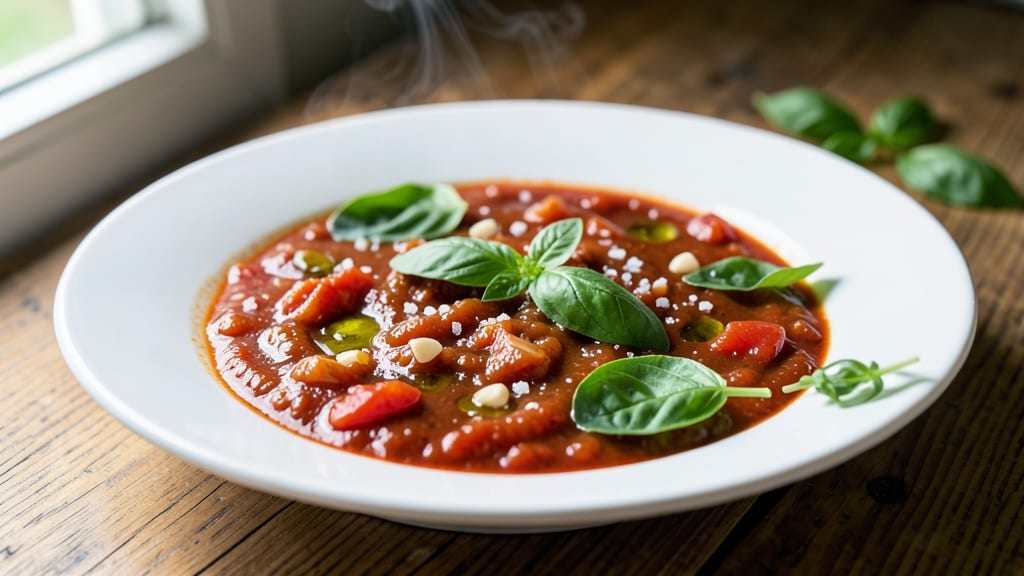
Marcella Hazan's original tomato sauce recipe is the foundation of every authentic Italian meal—simple yet transformative, built on slow simmering and precise technique rather than shortcuts. The key lies in using high-quality canned tomatoes and letting them develop depth over time, never boiling them into oblivion.
This sauce is what makes a simple pasta dish feel like a restaurant masterpiece.
What sets Marcella's method apart is its focus on texture and balance—chunky enough to retain the tomatoes' natural sweetness while smooth enough to coat perfectly. The slow simmering (never boiling) concentrates flavors without breaking down the tomatoes into mush, preserving their integrity and umami richness.
It's a technique that rewards patience with unmatched results.
By the time you're done, you'll have a sauce that's vibrant red, richly aromatic, and perfectly balanced between sweetness and acidity—ready to elevate any dish from ordinary to extraordinary.
The beauty of this recipe is its versatility: use it as-is for classic simplicity or customize with garlic, basil, or even a touch of meat for deeper flavor.
This is the sauce that built a culinary legacy, and now you can make it at home with the same care and precision Marcella herself would approve of. Let's get started on creating something truly timeless.
Ingredients for marcella hazan tomato sauce original
Eight essential ingredients transform into Marcella Hazan's timeless tomato sauce—where technique matters more than complexity.
| Ingredient | Amount | Notes |
|---|---|---|
| San Marzano Whole Canned Tomatoes 🍅 | 28 oz | Crushed by hand for texture |
| Extra-Virgin Olive Oil 🫒 | ¼ cup | High-quality, fruity variety |
| Onion 🧅 | 1 whole | Yellow or red, finely chopped |
| Garlic Cloves 🧄 | 4 cloves | Peeled, left whole for slow infusion |
| Diamond Crystal Kosher Salt 🧂 | 1 tsp | Adjust to taste, don't oversalt |
| Fresh Basil Leaves 🌿 | ¼ cup | Packed, torn by hand |
| Red Wine Vinegar 🍷 | 1 tbsp | For acidity balance |
| Sugar 🍚 | 1 tsp | Balances acidity naturally |
The tomatoes are non-negotiable: San Marzano is the gold standard, with their natural sweetness and low acidity. Purchase them whole in cans—Mutti or Cirillo brands are reliable—never the pre-crushed varieties. The difference in flavor is dramatic. For the olive oil, Italian extra-virgin like Colavita or Bertolli adds subtle fruity notes that elevate the sauce. The onion should be finely chopped, not minced, to maintain some texture. Fresh basil is ideal, but if unavailable, dried basil at one-third the amount works in a pinch—though purists will argue against it. Store your canned tomatoes in a cool, dark place; once opened, they'll last 5-7 days in the fridge.
No San Marzano tomatoes? Whole peeled Italian tomatoes are your next best option, but avoid anything labeled 'juice' or 'diced'—they lack the depth. For the olive oil, Spanish or Greek extra-virgin can substitute, though the flavor profile shifts slightly. The garlic cloves should remain whole during simmering to infuse flavor without bitterness; they can be minced afterward if desired. If you're short on vinegar, lemon juice at the same quantity works, though the flavor will be slightly different. The sugar is crucial—it's not about sweetness but balancing the acidity. Honey or maple syrup can replace it, but sugar dissolves more cleanly. For storage, this sauce freezes beautifully for up to 6 months—just thaw in the fridge overnight.
This sauce develops over time, so make it a day ahead if possible. The flavors meld and deepen, becoming richer with each passing hour. Store in an airtight container in the refrigerator for up to 5 days. For longer storage, portion into ice cube trays, freeze, and transfer to a bag—perfect for adding to pasta or soups later. The sauce thickens as it cools, so don't be alarmed if it seems too thin immediately after cooking. If you're serving it right away, a quick simmer with a splash of water or broth can adjust the consistency. The key to Marcella's method is patience; never rush the process, and the results will be nothing short of extraordinary.
Why You'll Love This Recipe
- This sauce is my pantry MVP: toss it with pasta, spoon it over grilled chicken, or freeze half for when you’re too wiped to cook. Honestly, I’ve even used it as a marinade—because why not? It’s that adaptable.
- No-Chop Nightmare: I swear by this sauce because the prep is that easy—just halve those San Marzano tomatoes, toss them in with the onion and garlic, and let the pot do the work. Even when I’m too tired to chop, this still tastes like I slaved over it.
- Garlic Confidence: That moment when you crush fresh garlic into warm olive oil and let it bloom? Chef’s kiss. The low-and-slow simmer with just salt and tomatoes builds a depth that jarred sauce can’t touch—bright, sweet, with a whisper of caramelized onion.
- Weeknight Swiss Army: This sauce is my pantry MVP: toss it with pasta, spoon it over grilled chicken, or freeze half for when you’re too wiped to cook. Honestly, I’ve even used it as a marinade—because why not? It’s that adaptable.
Step-by-step instructions for Marcella Hazan's original tomato sauce
This is Marcella Hazan's method—simple, precise, and designed to build rich, balanced flavor through technique rather than complexity.
Sauté Onion Until Translucent and Sweet
Heat the 0.25 cup extra-virgin olive oil in a heavy-bottomed saucepan over medium-low heat. Add the 1 whole finely chopped onion and cook, stirring occasionally, until completely soft and translucent—about 10-12 minutes. The onions should develop a sweet, caramelized aroma without browning. This slow cook time is essential; it develops the sauce's depth by breaking down the onion's natural sugars.
If the onions begin to color, reduce the heat slightly. You're aiming for a golden transparency, not a browned fond. This foundational step creates the sauce's sweet-savory base that will carry through the entire cooking process. Don't rush it—this is where the magic begins.
Add Garlic and Cook Just Until Fragrant
When the onions are perfectly soft, add the 4 whole peeled garlic cloves to the pan. Cook for exactly 30 seconds at medium-low heat, stirring constantly. The garlic should release its aroma but not begin to brown—this would introduce bitterness that will carry through the entire sauce.
Watch the pan closely during this brief cooking time. Garlic burns quickly, and once it turns golden, it's impossible to reverse. The moment you detect that sweet, pungent garlic aroma, remove the pan from heat immediately. This quick infusion is all you need to impart the garlic's essence without overpowering the delicate tomato flavor.
Build the Sauce with Tomatoes and Seasonings
Return the pan to medium heat and add the 28 oz San Marzano whole canned tomatoes. Using your hands or a wooden spoon, crush the tomatoes directly in the pan until you achieve a rough, rustic texture—about ¼-inch chunks. This manual crushing creates the perfect balance between smoothness and texture that defines Marcella's sauce.
Add the 1 tsp diamond crystal kosher salt, 1 tbsp red wine vinegar, and 1 tsp sugar. Stir well to combine all ingredients. The vinegar will brighten the sauce while the sugar balances the acidity of the tomatoes and vinegar. This combination of ingredients creates the classic Italian balance of sweet, sour, and salty that makes this sauce universally appealing.
Simmer Until Thickened and Balanced
Bring the sauce to a gentle simmer over medium-low heat. Partially cover the pan and cook for 45-50 minutes, stirring occasionally to prevent sticking. The sauce should reduce by about 40%—it will thicken noticeably and develop a deep, concentrated tomato flavor. You're looking for a sauce that coats the back of a spoon but still has a pleasant body.
Taste the sauce after 30 minutes of cooking. If it needs more acidity, add another ½ tsp red wine vinegar. If it needs more sweetness, add another ½ tsp sugar. The sauce should be balanced—neither too sharp nor too flat. This adjustment phase is where Marcella's method excels; it allows you to fine-tune the sauce to your exact taste preferences while maintaining its classic structure.
Finish with Fresh Basil and Rest Before Serving
Remove the pan from heat and stir in the 0.25 cup fresh basil leaves, torn by hand. The basil should wilt slightly but retain some texture. Let the sauce rest for 15-20 minutes before serving. This resting period allows the flavors to meld completely and the sauce to reach its optimal consistency.
Serve the sauce immediately over your choice of pasta, or refrigerate for up to 5 days for future use. The sauce will continue to develop flavor in the refrigerator, becoming even more complex over time. This is Marcella Hazan's original method—simple in ingredients, precise in technique, and timeless in execution. Each component plays its part in creating a sauce that stands the test of time and the scrutiny of discerning palates.
Pro Tips For Making Marcella Hazan Tomato Sauce Original
- Peel Tomatoes First: San Marzano tomatoes are easier to work with when peeled—just slash an "X" on the bottom, blanch 30 seconds, then shock in ice water. This saves you from fishing out skins later (yes, even if you’re impatient like me).
- Sweat Onions Slow: Low heat is your friend here. Cook onions until they’re translucent but not browned—about 8–10 minutes. Rushing this turns them bitter, and you’ll taste it in every bite.
- Crush Garlic Lightly: No need to mince—just smash the cloves with the flat side of your knife before adding them. This releases flavor without burning, and you won’t end up with a paste that turns the sauce bitter.
- Simmer Uncovered: Let the sauce bubble gently without a lid for the first 20 minutes. This helps reduce it faster and deepens the flavor—just stir occasionally so it doesn’t stick. (Your future self will thank you.)
Serving suggestions for this recipe
Classic Pasta Pairings
This sauce is a match made in heaven with spaghetti or linguine, where its rustic texture clings perfectly to the strands. I always use bronze-die pasta like De Cecco—the rough surface grabs the sauce better than smooth extruded varieties.
For a heartier option, try pappardelle or fettuccine, where the wider noodles create a satisfying bite with each forkful. 🍝
Protein Elevations
Add pan-seared chicken breast or braised short ribs to transform this sauce into a full meal. I recommend cooking 6-8 oz chicken in the sauce during the final 10 minutes of simmering so it absorbs the flavors.
For meat lovers, slow-cooked pork shoulder (shredded) adds incredible depth—just stir it in during the last 15 minutes of cooking.
Garnish Like a Pro
Fresh Pecorino Romano shavings add a sharp, salty contrast that cuts through the sauce's richness. I use a microplane to create delicate curls that melt into each bite.
For extra flair, finish with crispy fried sage leaves—just fry 4-5 fresh sage leaves in 1 tbsp olive oil for 10 seconds until crisp, then sprinkle on top. A drizzle of high-quality extra-virgin olive oil right before serving adds another layer of sophistication.
Unexpected Twists
For a vegetarian twist, stir in sautéed mushrooms (about 1 cup of cremini or shiitake) cooked in 1 tbsp olive oil with a pinch of thyme for 5 minutes before adding to the sauce.
Another fun variation is roasted garlic—replace the fresh garlic with 2 cloves roasted in their skins at 400°F for 20 minutes, then mashed into the sauce for a sweeter, deeper flavor profile.
Bread Service
Serve this sauce with crusty Italian bread like Focaccia or Ciabatta for dipping. I love toasting slices in the oven at 375°F for 5 minutes until golden, then drizzling with a little extra sauce.
The bread soaks up the flavors beautifully, creating a perfect appetizer or side dish. For a more elegant touch, pair with grissini (Italian breadsticks) for a sophisticated presentation.
Meal Prep Strategies
Make a double batch and freeze half in silicone ice cube trays—each cube is perfect for adding to pasta later. Thaw overnight in the fridge, then reheat gently on the stovetop with a splash of water.
For pasta salads, toss 1 cup cooked pasta with ¼ cup sauce, ½ cup cherry tomatoes, and 2 tbsp chopped basil for a refreshing cold dish. The sauce's acidity balances beautifully with room-temperature ingredients. 💡
Nutrition facts
Frequently asked questions
Why does Marcella's method use whole canned tomatoes instead of crushed?
Crushing the tomatoes by hand preserves their natural texture and prevents them from turning into a watery paste. Whole tomatoes release their juices gradually during simmering, creating a sauce with chunky bits that add depth and visual appeal. This technique also helps maintain the sauce's natural sweetness and umami richness.
Can I make this sauce without red wine vinegar?
Yes, you can substitute with lemon juice or white wine vinegar at the same quantity. The vinegar balances the sauce's acidity, so if you omit it, you may need to add a pinch more sugar (½ tsp) to maintain the sweet-sour balance. For a non-acidic option, a splash of tomato paste can also work.
What's the best way to store leftover sauce?
Transfer the cooled sauce to an airtight container and refrigerate for up to 5 days. For longer storage, freeze it in silicone ice cube trays—each cube is perfect for adding to pasta later. Thaw overnight in the fridge and reheat gently on the stovetop with a splash of water or broth to restore its texture.
How do I adjust the consistency if the sauce is too thick or thin?
For a thicker sauce, simmer uncovered for 5-10 more minutes to reduce further. If it's too thin, mix in 1 tbsp tomato paste or simmer with the lid slightly ajar to evaporate excess liquid. Avoid adding water directly—it dilutes the flavor. Always taste and adjust gradually.
What makes this sauce different from other tomato sauces?
Marcella's method focuses on slow simmering (never boiling), using high-quality San Marzano tomatoes, and balancing acidity/sweetness with vinegar and sugar. The 30-second garlic cook and hand-crushed tomatoes create a rustic texture and richer flavor profile that sets it apart from smoother, faster-prepared sauces.