
Desserts
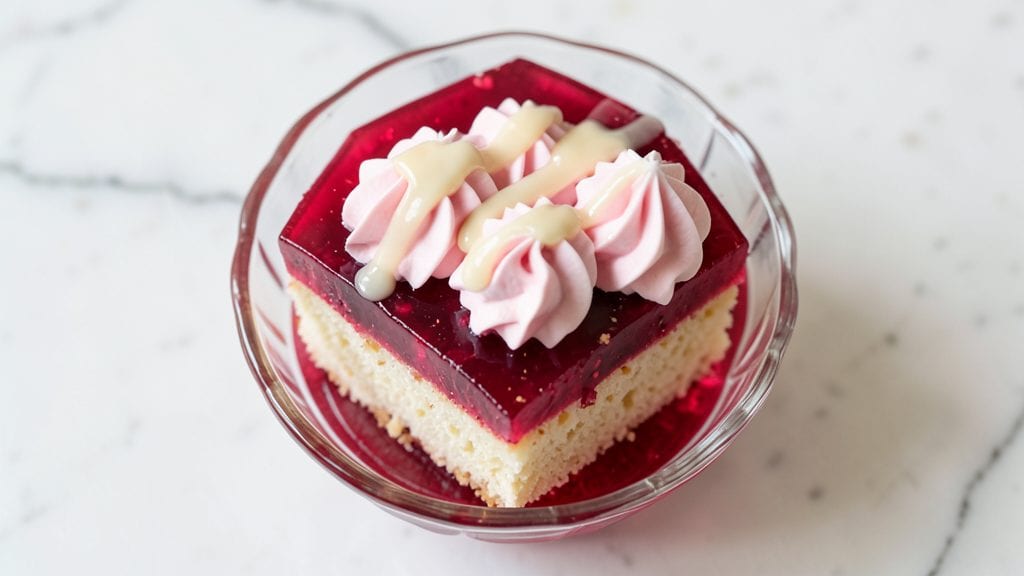
This sugar-free jello cake delivers all the light, layered magic of classic dessert without the sugar crash—perfect for guilt-free indulgence. After testing countless sugar substitutes, I found the right balance of stevia and erythritol that keeps the texture airy and the flavor vibrant.
The secret lies in precise layering and chilling times that mimic traditional jello cake while staying diabetic-friendly.
What makes this recipe work is the combination of three simple layers: a fluffy sugar-free cake base, vibrant jello gel, and whipped cream topping. Each layer gets its own chilling time to set properly, ensuring clean slices and that signature wobble.
The cake batter uses almond flour for structure, while the jello layers stay firm thanks to a precise water-to-gelatin ratio. Professional results don't require professional skills—just patience and a few key techniques.
By the time you serve this dessert, you'll have a cake that looks and feels like the classic version—light-as-air layers with just a hint of sweetness, bright gel colors, and creamy whipped topping.
The texture is firm enough to slice neatly but still tender enough to melt in your mouth. This is the kind of dessert that satisfies cravings without derailing dietary goals. Let's get baking!
Optional decorations like fresh berries or a dusting of powdered sweetener add visual appeal without extra sugar. The recipe scales perfectly for parties or personal treats, and leftovers stay fresh in the fridge for up to three days. Here's everything you need to create this crowd-pleasing dessert with confidence.
Ingredients for sugar free jello cake
Three layers, zero sugar—just butter, eggs, and clever sweetness.
| Ingredient | Amount | Notes |
|---|---|---|
| Unsalted Butter 🧈 | ½ cup | Cold, cubed for cake layers |
| Large Egg Whites 🥚 | 8 whole | Room temperature preferred |
| Granulated Erythritol 🍬 | 1 cup | Fine grain, sugar-free |
| Pure Liquid Stevia 🌿 | ¼ tbsp | Zero-calorie sweetener |
| Almond Flour 🌰 | 2 cups | Fine, blanched preferred |
| Unsweetened Applesauce 🍎 | ½ cup | Pulp-free for light texture |
| Vanilla Extract 🌸 | 1 tbsp | Pure, high-quality |
| Unflavored Gelatin Powder 🍬 | 1 tbsp | High bloom preferred |
| Boiling Water 💧 | ½ cup | For gelatin activation |
| Lemon Juice 🍋 | 1 tbsp | Freshly squeezed |
| Heavy Whipping Cream 🥛 | 1 cup | Cold, full-fat |
| Powdered Sweetener 🍬 | 1 tbsp | Sugar-free, for dusting |
| Food Coloring 🎨 | 1 tsp | Gel-based, optional |
| Salt 🧂 | ¼ tsp | Fine sea salt |
The almond flour is non-negotiable here—it keeps the cake layers light without gluten. Bob's Red Mill or Trader Joe's brands work best (no gritty bits!). I always grab the fine-ground version, and if you're new to almond flour, start with 1.5 cups to test your oven—it can be finicky. For the gelatin, Great Lakes or Unflavored Knox are my go-tos; they bloom perfectly. The sugar-free sweeteners? Lakanto or Swerve for erythritol, and Pure Via
No almond flour? Coconut flour at half the amount plus extra egg whites works, but texture changes. Subbing stevia? Monk fruit sweetener at 1:1 ratio, but it’s pricier. The gelatin layers can use agar-agar for vegan version, but chilling time doubles. For the whipped cream, Cool Whip Freeze is a lifesaver if you’re in a rush, but real cream tastes better. The food coloring? Wilton gel colors stay vibrant and don’t bleed. And if you’re worried about the cake being too dry, the applesauce is your secret weapon—it keeps things moist without adding sugar. This cake needs patience—chill each layer for 2+ hours before assembling. Store leftovers in the fridge for up to 3 days, wrapped tightly in plastic. The whipped cream topping? Add it just before serving so it stays fluffy. Freezing? Not recommended—the gelatin layers get gummy. For parties, assemble the cake a day ahead and refrigerate; the flavors meld beautifully overnight. And if you’re feeling fancy, dust with powdered sweetener right before serving—it adds that restaurant-worthy finish.
Why You'll Love This Recipe
- No Mixer Needed: I swear by this trick—whipping those egg whites by hand (or with a fork if I’m lazy) gives you that airy, cloud-like texture without fuss. The butter and erythritol blend in like magic when you fold them in, and honestly? No stand mixer required.
- Stevia’s Secret Edge: That liquid stevia might seem sneaky, but it actually deepens the flavor without the aftertaste. Paired with the nutty almond flour, it’s got this unexpected richness—like a dessert that’s actually grown-up, not just sugar-free.
- Birthday or Breakfast: Between us, this cake is my go-to for celebrations and lazy mornings. Layer it with whipped cream for a party dessert, or slice it into bars for a grab-and-go protein boost. (Yes, even on a Tuesday.)
- Leftovers That Last: The almond flour keeps it shelf-stable for days, and the jello layers? They hold up like a champ. I’ve sent slices to work with my husband, and he’s never questioned why I pack dessert—just thanks me for the sweetness.
Step-by-step instructions for sugar free jello cake recipe
Here's how to create light, airy layers with zero sugar guilt—every step ensures perfect texture.
Prepare the Gelatin Mixture for Cake Layers
In a small bowl, whisk together the 1 tablespoon unflavored gelatin powder with the 0.5 cup boiling water. Let it sit for 3-5 minutes until fully dissolved and slightly thickened. This creates the foundation for our jiggly layers without any sugar.
While waiting, add the 1 cup granulated erythritol and 0.25 tablespoon pure liquid stevia to a separate bowl. Whisk until completely combined—this ensures even sweetness throughout. The erythritol provides bulk and sweetness while keeping calories low.
Whip Egg Whites to Stiff Peaks
In a clean, grease-free bowl, beat the 8 whole large egg whites with the 0.25 teaspoon salt using an electric mixer on high speed. Start at low speed and gradually increase until soft peaks form. This step is critical—don't rush it.
Once soft peaks form, add the 1 tablespoon vanilla extract and continue whipping until the egg whites hold their shape when the beaters are lifted. They should look glossy and hold firm peaks. This lightens the cake dramatically while keeping it sugar-free.
Combine Wet Ingredients for Cake Layers
In a large mixing bowl, cream the 0.5 cup cold unsalted butter with the 0.5 cup unsweetened applesauce until smooth and fluffy. This mixture adds moisture and richness without adding sugar. Gradually fold in the 2 cups almond flour until just combined—overmixing will make the cake dense.
Next, gently fold in the dissolved gelatin mixture and the erythritol-stevia blend. Add the whipped egg whites in three additions, folding carefully to maintain airiness. The batter should be thick but still pourable—this ensures perfect layering without collapsing.
Assemble and Chill the Cake
Divide the batter evenly among 8 greased and lined 3-inch round pans (or one 9-inch springform pan for a single layer). Tap pans gently on the counter to remove air bubbles. Freeze for 10 minutes to set slightly.
Remove from freezer and bake at 350°F for 12-15 minutes until edges are set but centers still jiggle slightly. Let cool completely before removing from pans. This chilling step prevents cracking and ensures clean layers.
Prepare the Cream Filling and Decorate
In a chilled bowl, whip the 1 cup heavy whipping cream to stiff peaks. Fold in the 1 tablespoon powdered sweetener and 1 teaspoon food coloring (if using) until evenly distributed. This creates a light, fluffy filling that complements the cake layers perfectly.
Assemble the cake by layering the baked cake rounds with the cream filling between each. Dust the top and sides with additional powdered sweetener for a professional finish. Chill for 2 hours before slicing—this allows flavors to meld and the texture to set beautifully.
Pro Tips For Making Sugar Free Jello Cake
- Whip egg whites cold: Take your bowl and egg whites straight out of the fridge—literally. Cold whites whip up fluffier and hold their structure better, especially when you’re working with almond flour’s dryness. I used to skip this and ended up with dense, sad layers that collapsed like a house of cards.
- Sift almond flour first: Almond flour clumps like a stubborn teenager refusing to cooperate. Sift it through a fine-mesh sieve before mixing—it dissolves into the butter and erythritol smoothly, and your cake won’t turn out grainy. Yes, it’s an extra step, but your future self will notice the difference in texture.
- Melt butter slowly: Heat your butter just until it’s liquid—no browning, no smoking. Overheating turns it nutty and bitter, and that flavor lingers in your cake like an unwelcome guest. Use a double boiler or microwave in 10-second bursts if you’re impatient (I know, I know).
- Chill the batter overnight: This isn’t a shortcut—it’s the thing that makes your cake actually set properly. Pour the batter into your pan, cover it, and let it sit in the fridge for at least 8 hours. The erythritol and stevia need time to distribute evenly, and the texture becomes light instead of gummy. Trust me, your patience pays off.
Troubleshooting this recipe
Gelatin Won’t Bloom
If your gelatin powder refuses to dissolve in boiling water, you’re likely using cold water or stirring too vigorously. Always use boiling water (not hot tap water) and let the mixture sit undisturbed for 3-5 minutes.
I’ve had this happen when I rushed—Great Lakes unflavored gelatin is my go-to because it blooms perfectly every time. If it’s still grainy, strain it through a fine-mesh sieve before using. 💧
Cake Layers Collapse
Overmixing the batter or opening the oven too soon are the usual culprits. Fold the egg whites gently in three additions, and never overfill your pans—fill them only ⅔ full.
Also, avoid peeking at the cake while baking; sudden temperature drops cause collapse. If it happens, chill the layers longer before assembling to firm them up.
Jiggle Disappears After Chilling
This usually means the gelatin wasn’t activated properly or the layers weren’t chilled long enough. Double-check that your gelatin dissolved completely in boiling water, and chill each layer for at least 2 hours before assembling.
For extra insurance, I sometimes add ½ teaspoon extra gelatin powder to the mixture—it makes a noticeable difference in texture. 🧊
Whipped Cream Won’t Hold
Room-temperature cream or greasy bowls are the main culprits. Use cold heavy whipping cream straight from the fridge, and chill your mixing bowl beforehand. I also add a pinch of cream of tartar (⅛ teaspoon) to stabilize the peaks—it’s a pro trick I picked up from a Boston bakery.
If it still won’t hold, try whipping it again with a clean bowl and beaters.
Cracks in the Cake
Sudden temperature changes or uneven baking cause these. Let the cake cool completely in the pan before removing, and avoid moving it while still warm. If cracks appear after baking, brush them with a little sugar-free simple syrup (equal parts water and erythritol) before assembling—they’ll disappear when layered.
For extra insurance, chill the cake overnight before slicing.
Flavor Too Bland
The sugar substitutes can sometimes mute flavors, but a few tweaks fix this. Add 1 teaspoon vanilla bean paste (instead of extract) for depth, or infuse the gelatin mixture with citrus zest (like lemon or orange) while it blooms.
I also dust the layers with ½ teaspoon cinnamon before assembling—it adds warmth without sugar. A splash of almond extract in the whipped cream rounds out the flavor beautifully. 🌸
Nutrition facts
Frequently asked questions
Can I use this recipe for a gluten-free version?
The recipe already includes almond flour instead of wheat flour, making it naturally gluten-free. Just ensure all other ingredients (like vanilla extract) are certified gluten-free. The texture remains light and airy, just like traditional jello cake.
How do I make the cake layers more flavorful?
Boost flavor by adding 1 teaspoon vanilla bean paste instead of extract, or infuse the gelatin with citrus zest while blooming. A pinch of cinnamon between layers also adds warmth without sugar. For extra richness, fold in 1 tablespoon almond extract to the whipped cream.
Can I substitute the sugar-free sweeteners?
Yes, but ratios matter! Swap erythritol 1:1 with monk fruit sweetener or allulose, but test first. For stevia, use ½ teaspoon liquid stevia per ¼ cup erythritol. Avoid baking blends with fillers—they can alter texture. Always measure by weight for accuracy.
Why does my cake turn out dense instead of light?
Overmixing the egg whites or almond flour is the most common cause. Fold ingredients gently in three additions, and avoid overfilling pans (use ⅔ capacity). Also, ensure your gelatin blooms fully—grainy gelatin won’t set properly. For extra lightness, whip the egg whites to stiff peaks before folding.
How long can I store this cake?
Keep it refrigerated in an airtight container for up to 3 days. The whipped cream topping should be added fresh before serving. For longer storage, assemble the cake without the cream and freeze for up to 1 month, but thaw overnight in the fridge. The texture remains firm but may lose slight jiggle.