
Main Courses
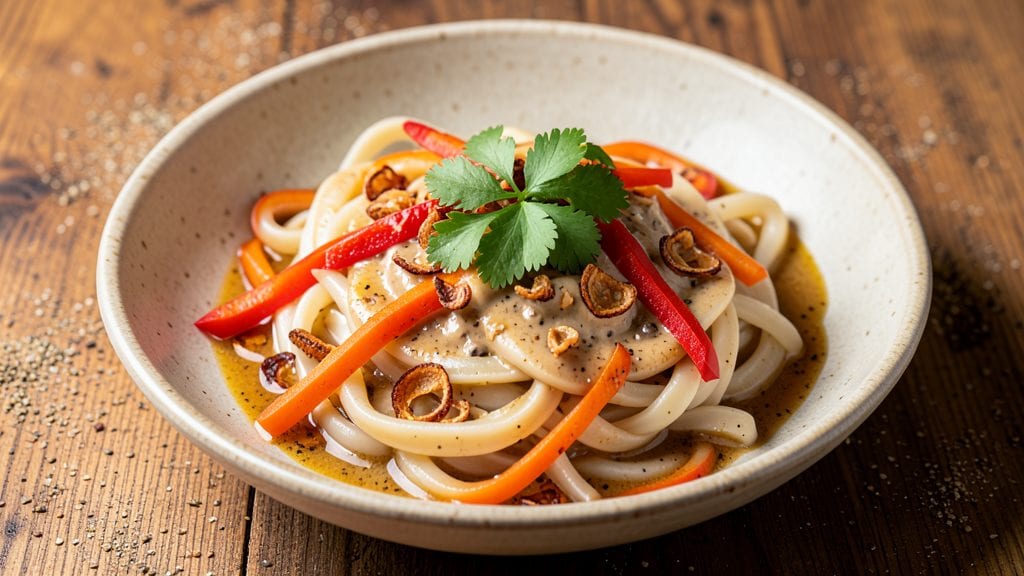
This veg udon recipe transforms traditional Japanese comfort food into a vibrant, plant-based masterpiece that delivers the same satisfying slurp and rich flavors without a single animal product. The miso-tahini swirl sauce creates a velvety, umami-packed base that perfectly complements the chewy udon noodles and crisp-tender shredded vegetables.
I developed this recipe after realizing how often vegan versions missed the depth of authentic udon dishes.
The foundation of this dish lies in balancing textures and flavors—silky noodles, crunchy shredded cabbage and carrots, and a sauce that's both tangy and nutty from the miso-tahini combination.
Using store-bought udon noodles keeps the preparation simple while still delivering that essential chewy texture, and the sauce comes together in minutes with pantry staples. The secret weapon? Toasting the tahini and miso paste together to deepen their flavors before emulsifying with warm broth.
What you'll end up with is a steaming bowl of udon that's packed with color, texture, and layers of savory-sweet umami flavors. The miso-tahini sauce clings beautifully to the noodles while enhancing the natural sweetness of the vegetables, creating a dish that's both satisfying and light.
This recipe proves plant-based comfort food can be just as rich and comforting as the traditional version.
Perfect for chilly evenings or as a hearty lunch, this veg udon recipe serves four and comes together in under 30 minutes. The leftovers keep well in the refrigerator for up to three days, making it an excellent meal prep option.
Whether you're a committed vegan or simply looking to incorporate more plant-based meals, this udon dish delivers restaurant-quality results at home.
Ingredients for veg udon
Pantry staples and fresh produce create this restaurant-quality vegan udon masterpiece.
| Ingredient | Amount | Notes |
|---|---|---|
| Udon Noodles 🍜 | 8 oz | Dried, chewy variety preferred |
| White Miso Paste 🍶 | ¼ cup | Use high-quality aged miso |
| Tahini 🥜 | ¼ cup | Sesame paste, unsweetened |
| Vegetable Broth 💧 | 1 ½ cups | Low-sodium preferred |
| Red Bell Pepper 🌶️ | 1 medium | Shredded, seeds removed |
| Carrots 🥕 | 2 medium | Shredded, peeled |
| Green Cabbage 🥬 | 4 cups | Thinly sliced, core removed |
| Sesame Seeds 🌱 | 1 tbsp | Toasted for garnish |
| Sesame Oil 🫒 | 1 tbsp | For finishing |
| Rice Vinegar 🍶 | 1 tbsp | For acid balance |
| Maple Syrup 🍯 | 1 tsp | For subtle sweetness |
| Diamond Crystal Kosher Salt 🧂 | ½ tsp | For seasoning broth |
| Fresh Ginger 🧅 | 1 inch | Peeled, grated |
| Garlic Cloves 🧄 | 2 cloves | Minced for sauce |
| Red Chili Flakes 🌶️ | ¼ tsp | Optional for heat |
The miso and tahini are the flavor anchors here. Japanese white miso from Miso Master or the bulk bins at Whole Foods delivers the deepest umami, while tahini should be 100% sesame—no additives. The udon noodles are non-negotiable; Nissin or Maruchan brands provide that signature chew. For the vegetables, organic cabbage and carrots from the farmers market stay crispest when shredded just before cooking. The ginger and garlic? Freshly grated and minced—pre-minced garlic loses its punch quickly.
No white miso? Red miso at half the amount adds depth but intensifies color. Tahini shortages? Cashew butter works in a pinch, though texture differs slightly. The vegetable broth can be substituted with water plus 1 tsp vegetable bouillon, but homemade broth elevates the dish. For the shredded vegetables, a mandoline slicer ensures uniform thickness—critical for even cooking. The red bell pepper can be swapped for shredded zucchini or jicama if preferred, though sweetness varies. Always taste the sauce before assembling; adjust with more maple syrup for sweetness or rice vinegar for acidity.
Store the miso paste in the fridge once opened—it keeps for up to 6 months. Tahini separates when refrigerated; stir before using. The shredded vegetables hold for 2 days in the fridge if stored in airtight containers with a paper towel to absorb moisture. The cooked udon reheats beautifully with a splash of water—just 2 minutes in the microwave. For meal prep, assemble bowls without the sesame oil and seeds; add them fresh when serving to maintain crispness.
Why You'll Love This Recipe
- No Boil Required: I swear by this trick—just toss the udon in hot broth for 2 minutes, and they soften perfectly without that sad, mushy texture. The miso and tahini do all the heavy lifting while you prep the rest.
- Umami Bomb: That white miso paste? It’s the secret weapon here—deep, savory, and just a spoonful turns a simple veggie stir-fry into something rich and complex. The tahini adds a nutty creaminess that balances the bright red bell pepper like a dream.
- Lunchbox Hero: Between us, this is my go-to for meal prep because it reheats like a champ. Pack the noodles dry, then pour hot broth over them when you’re ready—no soggy mess, just restaurant-quality flavor in a container.
- Pantry Magic: Honestly, I make this when I’m broke or lazy (or both). Udon’s cheap, miso lasts forever, and you can swap in whatever veggies are sitting in your crisper. Leftovers? Even better the next day—if there are any.
Step-by-step instructions for miso-tahini udon noodles
Here's how to assemble this vibrant, umami-rich udon dish with perfect texture contrast.
Prepare the Miso-Tahini Sauce Base
In a small saucepan, combine the 0.25 cup white miso paste, 0.25 cup tahini, 1.5 cups vegetable broth, 1 tbsp rice vinegar, and 1 tsp maple syrup. Warm over medium-low heat for 3-4 minutes, stirring constantly until the mixture reaches 160°F and becomes smooth and homogeneous. You'll notice the tahini emulsify into the broth, creating a velvety texture.
Remove from heat and whisk in the 1 inch peeled and grated fresh ginger and 2 minced garlic cloves. This infusion will develop the sauce's aromatic depth. Taste and adjust seasoning with the 0.5 tsp diamond crystal kosher salt and 0.25 tsp red chili flakes if needed. The sauce should balance sweet, savory, and subtle heat—this is your flavor foundation.
Cook and Blanch the Vegetable Medley
While the sauce simmers, prepare the vegetables by shredding the 1 medium red bell pepper and 2 medium carrots into thin strips using a mandoline or sharp knife. Thinly slice the 4 cups green cabbage, removing the core. In a large pot of boiling water, blanch the vegetables for exactly 1 minute—this preserves their vibrant color and slight crunch while softening them just enough for perfect texture.
Drain immediately and plunge into ice water to stop the cooking process. This shock treatment maintains their crisp texture. Drain again thoroughly and set aside. The vegetables should retain their bright colors and offer a satisfying bite—this is crucial for the dish's texture contrast.
Cook the Udon Noodles Al Dente
Bring a separate pot of water to a rolling boil and add the 8 oz udon noodles. Cook according to package instructions, typically 4-5 minutes, until they float to the surface and are al dente. Drain immediately and rinse briefly under cold water to halt cooking and remove excess starch. This prevents the noodles from becoming mushy when combined with the sauce.
Divide the cooked udon noodles among four serving bowls. The noodles should be hot but not steaming—this ensures they absorb the sauce properly without becoming soggy. The slight sheen on their surface indicates they're ready to receive the flavorful components.
Assemble and Finish the Dish
Pour the warm miso-tahini sauce evenly over the udon noodles, coating them completely. The sauce should cling to the noodles, creating a glossy sheen. Distribute the blanched vegetables evenly among the bowls, creating visual contrast with their bright colors against the noodles.
Drizzle each serving with 1 tbsp sesame oil and sprinkle generously with 1 tbsp toasted sesame seeds. The sesame oil adds nutty richness while the seeds provide textural contrast. Serve immediately while the noodles are hot and the vegetables retain their crispness.
Garnish and Serve with Precision
For final presentation, add a few extra shreds of red bell pepper and carrot to each bowl for visual appeal. The vibrant colors create an inviting contrast against the udon noodles. The dish should be served immediately as the textures and temperatures are at their peak—this is when the balance of crunchy vegetables, chewy noodles, and silky sauce shines.
Each bite should deliver the umami depth from the miso-tahini sauce, the satisfying crunch of the blanched vegetables, and the subtle heat from the red chili flakes. The dish maintains its integrity for about 15 minutes after assembly, so serve promptly for optimal texture and flavor.
Pro Tips For Making Veg Udon
- Bloom the Miso: Whisk that white miso paste with the vegetable broth first—don’t just toss it in cold. Heat the broth to a gentle simmer (just until tiny bubbles form), then stir in the miso until it fully dissolves. I learned this the hard way when my first batch left grainy miso clumps that ruined the silky texture.
- Sear the Bell Pepper: Char the red bell pepper strips before adding them to the broth—cut them into 1-inch pieces, toss in a dry pan over high heat for 2-3 minutes until blackened in spots. The smoky depth cuts through the richness of tahini and miso, and it takes less than 5 minutes. (Yes, even if you’re impatient like me.)
- Test the Noodles Early: Cook the udon noodles one minute less than the package says, then finish them in the hot broth. Overcooked udon turns mushy in the sauce, and you’ll end up with a sad, gluey mess. Drain them, rinse briefly in cold water, then shock them with ice for 30 seconds—this stops the cooking and keeps them from turning to paste.
- Thin the Tahini: Mix tahini with a splash of hot broth before adding it to the pot—about 1 tablespoon per 2 tablespoons tahini. Cold tahini clumps and separates, turning your soup into a greasy disaster. Stir it into the warm broth first, then let it emulsify naturally. (Your future self will thank you.)
Wine and beer pairings for this recipe
Light Japanese Sake
The delicate, slightly sweet profile of a dry Japanese sake like Dassai Junmai or Kubota Junmai complements the umami richness of the miso-tahini sauce without overpowering it.
The crisp acidity and subtle floral notes in these sakes cut through the tahini's creaminess while enhancing the ginger and garlic in the sauce. Serve slightly chilled (45-50°F) to highlight its delicate flavors. 🍶
Crisp White Wine
A dry Riesling from Germany or a Sauvignon Blanc from New Zealand adds brightness to balance the dish's savory depth. The citrus and herbal notes in these wines mirror the cabbage and bell pepper while cleansing your palate between bites.
Look for wines with 3-5g/L residual sugar to avoid sweetness clashing with the miso. Chill to 48-52°F for optimal enjoyment.
Hoppy Craft Beer
For beer lovers, a session IPA with 4-6% ABV like Allagash White or Trillium Brewing Company's Hoppy Little Thing provides a refreshing contrast. The hoppy bitterness complements the tahini's nuttiness, while the beer's effervescence mirrors the udon's chewy texture.
Serve at 40-45°F to preserve its crispness and avoid muting the dish's flavors.
Non-Alcoholic Options
For a non-alcoholic pairing, try sparkling yuzu soda—the citrusy effervescence enhances the ginger and garlic in the sauce while providing a refreshing contrast. Alternatively, a cold brewed green tea with a hint of honey adds subtle sweetness that complements the maple syrup in the udon.
Both options keep the dish's vibrant flavors front and center. 💧
Regional Adaptations
In Japan, this dish would traditionally pair with green tea or sake—both staples in udon culture. For a Korean-inspired twist, swap the sake for soju (diluted with water) and add a side of kimchi to intensify the umami.
The heat and tang of kimchi create a dynamic contrast with the cool, creamy udon. For a Chinese adaptation, consider a light lychee or jasmine tea to complement the dish's sweet-savory balance.
Seasonal Considerations
During summer, opt for sparkling rosé or a light lager to refresh your palate against the dish's richness. In winter, a richer sake like Kuro or a dry Riesling with higher acidity warms the meal while cutting through the tahini's creaminess.
The seasonal adaptation ensures your pairing enhances the dish year-round. ❄️
Nutrition facts
Frequently asked questions
Can I make this veg udon recipe gluten-free?
Yes! Use 100% buckwheat or rice udon noodles instead of traditional wheat-based ones. These alternatives maintain the chewy texture while eliminating gluten. Just check labels to ensure no cross-contamination with wheat during processing. The miso-tahini sauce remains perfectly safe as long as your miso paste is certified gluten-free.
How do I adjust the sauce for a nut-free version?
Replace the tahini with 1/4 cup cashew butter or 2 tbsp sunflower seed butter for a nut-free alternative. Thin with extra vegetable broth if needed, as seed butters are thicker. The flavor will be slightly less rich but still deliver that creamy texture. For maximum umami, add 1 tsp nutritional yeast to the sauce.
Can I prepare this udon ahead of time?
Cook the udon noodles and vegetables separately, then store them in airtight containers in the fridge for up to 2 days. Keep the sauce in a separate jar. When ready to serve, reheat the noodles with a splash of water, warm the sauce gently, and reassemble. The vegetables will soften slightly but maintain their color. For best texture, add fresh sesame seeds and oil just before serving.
What if my udon noodles turn out mushy?
Overcooking is the most common cause. Always follow package instructions precisely and rinse with cold water immediately after draining to stop cooking. For extra chewiness, try drying the noodles slightly on a kitchen towel before assembling. If they're already too soft, stir in 1 tsp cornstarch mixed with water to thicken the sauce slightly.
How can I add protein to this veg udon?
Try pan-frying extra-firm tofu cubes with soy sauce and sesame oil before adding them to your bowl, or stir-fry shredded king oyster mushrooms with garlic and chili flakes. For a quick option, add 1/2 cup cooked edamame or 1/4 cup chickpeas to each serving. These additions boost protein while complementing the dish's flavors.