
Breakfast & Brunch
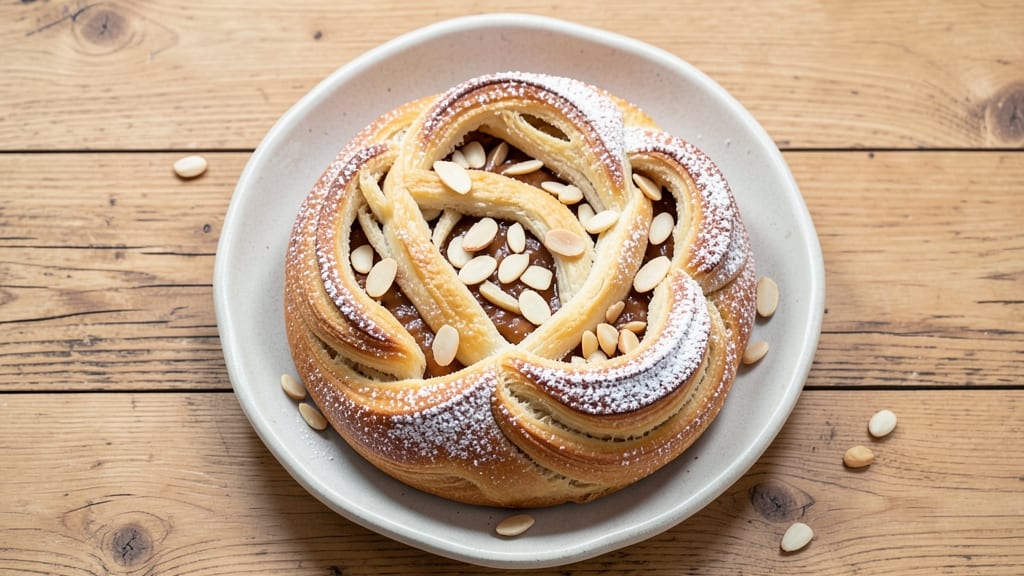
This almond kringle recipe delivers the perfect balance of flaky Scandinavian pastry and rich, nutty sweetness that feels like a hug from a bakery shelf.
Standing on a step stool in my grandmother’s kitchen in Sicily, I first learned how layering butter into dough creates that signature crispness—though I’ve adapted the technique here for a modern twist. The almond filling, with its caramelized sugar and toasted nuts, transforms a simple pastry into something extraordinary.
What makes this recipe special is the harmony between the dough and filling—flaky layers that hold their shape while yielding to tender bites of almond goodness. Unlike traditional versions, this adaptation uses a simpler yeast-based dough that’s easier to work with but still delivers that signature Scandinavian flair.
The secret lies in chilling the dough before rolling and folding, which ensures those signature layers without the fuss.
By the time it emerges from the oven, you’ll have a golden, flaky kringle with crisp edges and a tender center, all infused with the warm, nutty aroma of almonds. The filling stays moist and rich, while the pastry maintains its structure—perfect for slicing into neat wedges.
This is the kind of treat that pairs beautifully with coffee or becomes the star of a brunch spread.
Whether you’re baking for a family gathering or simply craving something special, this almond kringle delivers restaurant-quality results at home. The dough can be made ahead, and the filling comes together in minutes—making it the ideal project for a weekend baking session. Let’s get started!
Ingredients for almond kringle
Eight simple ingredients transform into golden, flaky kringle with nutty almond filling.
| Ingredient | Amount | Notes |
|---|---|---|
| All-Purpose Flour 🌾 | 4 cups | Sifted for light texture |
| Unsalted Butter 🧈 | 1 ½ cups | Cold, cubed for dough layers |
| Granulated Sugar 🍚 | ¼ cup | For dough sweetness |
| Instant Yeast 🍞 | 2 ½ tsp | Active dry works too |
| Salt 🧂 | ½ tsp | Kosher or sea salt |
| Whole Milk 🥛 | ½ cup | Room temperature |
| Large Eggs 🥚 | 1 whole | Room temperature |
| Almonds 🥜 | 1 ½ cups | Toasted, slivered or whole |
| Light Brown Sugar 🍚 | ½ cup | Packed, for filling |
| Powdered Sugar 🍚 | ¼ cup | For dusting |
| Vanilla Extract 🍯 | 1 tsp | Pure vanilla preferred |
| Ground Cinnamon 🌿 | ½ tsp | Optional for warmth |
| Heavy Cream 🥛 | ¼ cup | For filling richness |
| Egg Yolk 🥚 | 1 whole | For egg wash |
| Coarse Sugar 🍚 | ¼ cup | For topping (optional) |
The butter is non-negotiable here—European-style or Plugrá makes all the difference for those signature layers. Most grocery stores carry it now, but if you can't find it, Land O'Lakes works in a pinch. Keep it cold when working with the dough—wrap the butter cubes in parchment paper and store them in the freezer until ready to use. The almonds? Trader Joe's slivered almonds are my go-to—they toast perfectly and stay crisp. Toast them yourself for extra flavor, but don't skip it. The yeast should be fresh—if it's more than a few months old, test it in warm milk first to make sure it's active.
No almonds? Toasted pecans or hazelnuts work beautifully—just adjust the amount to taste. Running low on brown sugar? White sugar plus 1 tbsp molasses mimics the moisture. The vanilla extract can be imitation, but pure Madagascar bourbon vanilla elevates everything. For the dough, if you don't have instant yeast, dissolve active dry yeast in warm milk first. The heavy cream in the filling can be swapped for half-and-half, though it won't be as rich. And if you're feeling fancy, add a splash of almond extract to the filling for extra depth.
This dough keeps for 2 days in the fridge, wrapped tightly in plastic. For longer storage, freeze the shaped dough for up to 3 months—thaw overnight in the fridge before baking. The filling can be made ahead and stored in the fridge for 3 days, though the texture is best when used fresh. Once baked, kringle stays fresh for 3 days at room temperature, wrapped in a clean kitchen towel. For serving, dust generously with powdered sugar—it's worth the extra minute.
Why You'll Love This Recipe
- No Yeast Stress: I swear by this dough—just mix, fold, and let it rest. No kneading, no waiting for yeast to wake up. That butter-rich dough? It’s forgiving even when I rush.
- Buttery Almond Magic: The moment you slice into that golden crust and hit the warm, toasted almond filling? Pure joy. It’s sweet but not cloying, nutty but not heavy—like a hug from Denmark.
- Weeknight or Company: Same dough, endless uses. Serve it warm with breakfast coffee or let it cool for picnic-friendly slices. Honestly, I’ve even dressed it up for holidays by adding a sprinkle of powdered sugar.
- Leftovers That Last: One batch feeds my family for days. The crust stays crisp, the almond filling doesn’t dry out, and it reheats in seconds. My secret weapon for lazy mornings? Pre-sliced and frozen.
Step-by-step instructions for almond kringle
Here's how to create layers of golden pastry and nutty sweetness that will make your kitchen smell like a European bakery.
Make the Dough for Maximum Flakiness
In a large bowl, whisk together the 4 cups all-purpose flour, 2.5 teaspoons instant yeast, 0.5 teaspoon salt, and 0.25 cup granulated sugar. Cut in the 1.5 cups cold cubed unsalted butter using a pastry cutter or your fingers until the mixture resembles coarse crumbs with pea-sized butter pieces. This texture is crucial for flaky layers.
Add the 0.5 cup room temperature whole milk and 1 whole large egg, mixing just until the dough comes together. Avoid overworking it—handle only enough to form a shaggy mass. Divide the dough into two equal portions, wrap each in plastic wrap, and refrigerate for at least 1 hour (or up to 24 hours). The cold rest develops gluten structure while keeping the butter firm for those signature flaky layers.
Prepare the Almond Filling
Preheat your oven to 350°F. Toast the 1.5 cups almonds on a baking sheet for 8-10 minutes until golden and fragrant, stirring occasionally. Let them cool slightly, then pulse in a food processor until you have roughly chopped pieces—about the size of small breadcrumbs. Transfer to a bowl and mix with 0.5 cup packed light brown sugar, 0.25 cup heavy cream, 1 teaspoon vanilla extract, and 0.5 teaspoon ground cinnamon (if using).
The filling should be moist but not wet—if it feels too dry, add 1 teaspoon milk to help it bind. This mixture will create the signature nutty-sweet center that contrasts beautifully with the crisp pastry. Set aside while you roll out the dough.
Roll and Assemble the Kringle
On a lightly floured surface, roll one dough portion into a 12x10-inch rectangle, about 1/8-inch thick. Spread the almond filling evenly over the entire surface, leaving a 1-inch border around the edges. Brush the border with 1 whole egg yolk mixed with 1 tablespoon water for a golden finish.
Roll up the dough tightly from the long side, pinching the seam to seal. Transfer to a parchment-lined baking sheet and shape into a 12-inch circle by gently pressing the edges together. Repeat with the second dough portion, using the remaining filling if needed. Brush both rings with the remaining egg wash and sprinkle with 0.25 cup coarse sugar (if using) for extra crunch.
Bake to Golden Perfection
Bake in the 350°F oven for 30-35 minutes until the kringle is deep golden brown and sounds hollow when tapped on the bottom. The edges should pull away slightly from the parchment, and the filling should be just set but still soft inside.
Transfer to a wire rack and let cool for 10 minutes before slicing. The warmth will help the filling firm up slightly, making it easier to serve. Brush the top with 0.25 cup powdered sugar dissolved in 1 tablespoon milk for a professional finish. Each slice should reveal those beautiful flaky layers and a gooey almond center that's the heart of this classic pastry.
Pro Tips For Making Almond Kringle
- CHILL THE DOUGH: After kneading, let the dough rest in the fridge for at least 2 hours—yes, even if you’re eager to shape it. I used to skip this and end up with a dense, tough kringle that looked more like a brick than a pastry. Cold dough handles better, rises more evenly, and gives you that flaky, layered texture you’re after.
- WEIGH YOUR BUTTER: Use a kitchen scale for the butter—don’t eyeball it. Butter’s density varies, and packing too much into the dough makes it greasy and hard to handle. Aim for 80% of the flour weight in butter (e.g., 200g butter for 250g flour) for that perfect balance of richness and structure.
- DON’T OVERPROOF THE YEAST: The dough should double in size, but stop shaping it once it’s just puffy—about 1.5 to 2 times its original volume. I learned this after one batch collapsed into a sad, flat mess because I left it rising too long. A gentle poke should leave a slow bounce-back, not a quick spring.
- SKIP THE ALMOND PULSE: Toast the almonds until they’re golden and fragrant, then pulse them in a food processor—just enough to break them into rough chunks, not almond butter. Whole or large pieces add texture and prevent the filling from turning into a gluey paste. (Pro tip: Cool them completely before mixing into the dough.)
Make-ahead tips for leftovers
Dough Prep Ahead
The dough is where the magic happens, and it’s the perfect candidate for make-ahead prep. After mixing the ingredients, divide the dough into two portions, wrap each in plastic wrap, and refrigerate for at least 1 hour—I often do this the night before.
The cold rest not only develops flavor but also makes rolling easier. If you’re really ahead of the game, you can freeze the dough for up to 3 months. Just thaw it overnight in the fridge before rolling. 💫
Filling Prep
The almond filling can be made 2 days in advance and stored in an airtight container in the fridge. This is a game-changer for busy mornings—simply pull it out, let it sit at room temperature for 10 minutes before assembling, and you’re ready to roll.
Pro tip: Toast the almonds fresh for the filling if you can, but pre-toasted almonds work in a pinch. The filling should be moist but not sticky—adjust with a splash of milk if needed.
Shaped & Ready
Once you’ve rolled, filled, and shaped your kringle, you can refrigerate the assembled rings for up to 12 hours before baking. This extra rest time helps the filling set slightly, making it easier to handle.
Wrap each ring tightly in plastic wrap and place them on a baking sheet. When you’re ready to bake, let them sit at room temperature for 30 minutes to prevent condensation issues in the oven.
Baked & Stored
Freshly baked kringle is best served within 24 hours, but you can store it at room temperature in an airtight container for up to 3 days. For longer storage, slice the kringle and freeze the pieces in a single layer before transferring to a freezer bag.
To reheat, warm slices in a 350°F oven for 5-7 minutes or microwave for 10-15 seconds—just enough to soften the pastry without drying it out. The filling stays rich and gooey either way. 🍽️
Freezer-Friendly Assembly
If you’re planning ahead for a special occasion, assemble the kringle completely (rolled, filled, and shaped) and freeze it on a parchment-lined tray. Once frozen solid, transfer it to a freezer bag for up to 2 months.
When ready to bake, thaw overnight in the fridge and proceed as directed. The texture won’t be affected—just as flaky and delicious as if you’d baked it fresh!
Serving Prep
Dusting with powdered sugar is the final touch, but I like to do this right before serving so it stays fresh. If you’re prepping for a brunch or gathering, set out a small bowl of powdered sugar and a sieve so guests can dust their own slices.
Pair with a cup of strong black coffee or a glass of chilled milk for the ultimate Scandinavian-inspired treat. The aroma alone will have everyone gathering around your table. ✨
Nutrition facts
Frequently asked questions
What makes this almond pastry different from regular Danish pastries?
This recipe uses a yeast-based dough with a higher butter content than traditional Danish pastries, creating those signature flaky layers. The almond filling is richer and more concentrated than typical fruit fillings, with toasted nuts and caramelized sugar for depth of flavor. While Danish often have cream cheese or custard fillings, this version delivers a nutty, buttery contrast that's uniquely Scandinavian.
Can I make this with store-bought pie crust instead of homemade dough?
You can try, but the texture won't be the same. Store-bought crust lacks the flaky layers created by cold butter folding. For best results, use the yeast dough recipe—it's easier than you think! If you're short on time, consider using high-quality puff pastry as a compromise, though it will have a different crumb structure. The filling recipe remains the same either way.
How do I prevent the filling from leaking out during baking?
Keep the filling moist but not sticky—adjust with milk if needed. Roll the dough 1/8-inch thick and leave a 1-inch border around edges. Seal the seam tightly when rolling, and brush the border with egg wash before shaping. Chill the assembled kringle for 30 minutes before baking to help the filling set slightly. This technique ensures the pastry holds its shape while keeping the filling gooey inside.
What's the best way to serve this pastry?
This kringle shines at brunch or afternoon tea. Serve warm with a dusting of powdered sugar and a cup of strong black coffee for a Scandinavian-inspired treat. For a festive touch, arrange slices on a platter with fresh berries or a scoop of vanilla ice cream. The nutty filling pairs beautifully with citrusy drinks like orange juice or espresso martinis.
Why did my kringle turn out dense instead of flaky?
Dense kringle usually means the butter wasn't cold enough when mixed or the dough was overworked. Always chill the dough between folds and handle it gently. Use European-style butter (82% fat content) for best results. If the oven was too hot, the butter melted too quickly. Aim for 350°F and bake until golden brown—don't overbake! The filling should be soft but not runny when done.