
Soups & Stews
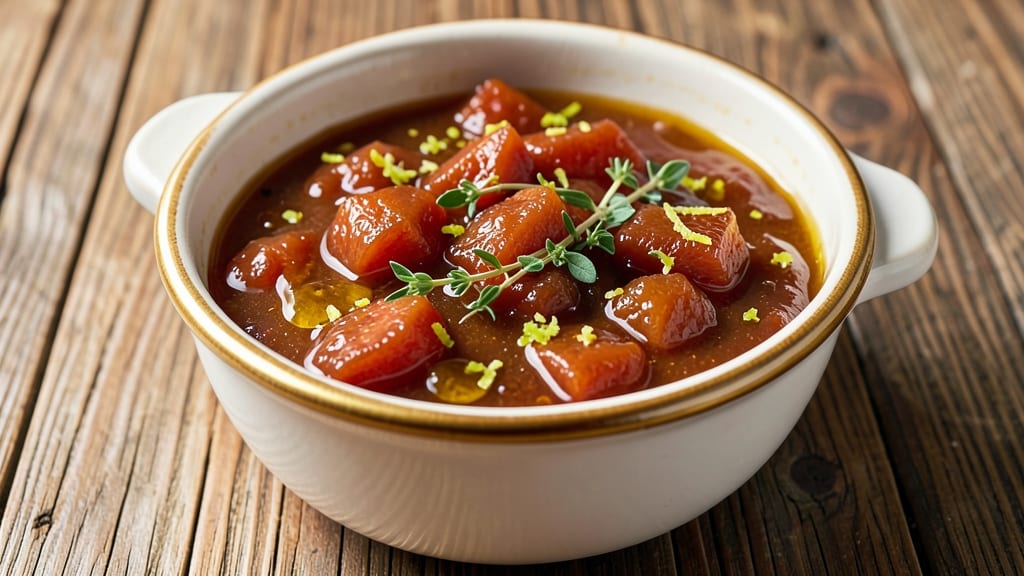
Creating a tomato marmalade recipe with that perfect sweet-tart balance and long shelf life is simpler than you think. This versatile spread transforms ordinary tomatoes into a rich, jam-like condiment that elevates everything from toast to cheese boards.
After years of perfecting the technique, I’ve found the key lies in precise sugar ratios and controlled simmering to achieve that ideal gel-like consistency.
The process focuses on reducing tomatoes with sugar and acidifiers like lemon juice until thick and spreadable, creating a marmalade that’s both vibrant and deeply flavorful.
What makes this recipe stand out is its ability to preserve for months, making it perfect for gifting or keeping on hand for quick meals. The result is a glossy, tangy-sweet spread that adds depth to both sweet and savory dishes.
With just a few simple ingredients and about an hour of active time, you’ll have a batch of marmalade that’s far more complex than store-bought versions. The texture is thick yet smooth, with a balance of sweetness and acidity that lingers on the palate.
Whether you’re drizzling it over brie or spreading it on crusty bread, this marmalade delivers restaurant-quality flavor at home.
Once you’ve mastered the technique, you can experiment with variations like adding herbs or spices for extra depth. The best part? This marmalade keeps for up to a year when stored properly, making it a pantry staple worth perfecting.
Let’s get started on creating your own batch of this versatile spread.
Ingredients for tomato marmalade
Eight essential ingredients transform ordinary tomatoes into a restaurant-quality marmalade with perfect sweet-tart balance.
| Ingredient | Amount | Notes |
|---|---|---|
| Ripe Roma Tomatoes 🍅 | 4 lb | Heirloom or vine-ripened preferred |
| Granulated White Sugar 🍚 | 3 cups | Organic preferred for purity |
| Fresh Lemon Juice 🍋 | ½ cup | From 2-3 fresh lemons |
| Extra-Virgin Olive Oil 🫒 | ¼ cup | High-quality, fruity variety |
| Apple Cider Vinegar 🍶 | 2 tbsp | For acidity balance |
| Fresh Thyme Leaves 🌿 | 1 tbsp | Optional for herbal depth |
| Diamond Crystal Kosher Salt 🧂 | 1 tsp | Fine grain preferred |
| Pectin Powder 🍇 | 1 tsp | For enhanced gel formation |
| Fresh Basil Leaves 🌿 | ¼ cup | Chopped, for aromatic finish |
The tomatoes are absolutely critical—Roma or heirloom varieties have the right balance of acidity and sweetness, while grocery-store vine-ripened work in a pinch. Local farmers markets often have perfect specimens, but the grocery store produce section can deliver too if you pick firm, vibrant tomatoes. Sugar is non-negotiable for that ideal set—organic granulated prevents off-flavors. I always grab a 5-pound bag from Costco for bulk savings, but individual 4-pound bags work perfectly for a single batch. The lemon juice should be freshly squeezed—bottled juice lacks the bright acidity this recipe needs for that perfect tang. For the olive oil, California extra-virgin brands like Corto or Colavita elevate the final product with their fruity notes.
No fresh thyme? Dried thyme at one-third the amount works, though fresh gives that unmatched aromatic punch. Running short on pectin? Extra lemon juice and longer simmering can compensate, but you might need to add a bit more sugar to balance. The basil is purely optional but adds a fresh herbal note that pairs beautifully with the sweet-tart profile. For sugar substitutes, agave nectar at a 1:1 ratio works but may affect shelf life slightly. The vinegar can be swapped for white wine vinegar if that's what's in your pantry—just reduce to 1.5 tablespoons to avoid over-acidifying. And if you're feeling adventurous, a pinch of red pepper flakes adds subtle heat that's surprisingly delicious.
This marmalade develops deeper flavor over time—let it sit for 24 hours before using for the best results. Store in sterilized glass jars with tight-sealing lids for up to 12 months in a cool, dark pantry. The olive oil layer that forms on top is normal and can be skimmed off before each use. Once opened, refrigerate and consume within 3 months. I always make a double batch—one jar stays in my pantry, and the other becomes a gourmet gift for friends. The marmalade freezes beautifully too, though texture may change slightly upon thawing.
Why You'll Love This Recipe
- No-Chop Required: I’ll be real—this recipe only asks for a quick chop of Roma tomatoes (or even a food processor if I’m lazy). No peeling, no dicing, no stress. The rest? Just simmer, stir, and let the sugar work its magic.
- Sweet-Tart Magic: That balance of bright lemon juice and rich olive oil? It’s like summer in a jar. The vinegar cuts through the sweetness just enough to make every spoonful irresistible—perfect for when I want something familiar but still exciting.
- Pantry Staple Upgrade: I keep a jar of this in my fridge year-round. Drizzle it over grilled cheese, toss it with pasta, or use it as a quick sauce for roasted veggies. It turns basic meals into something special without extra effort.
- Lasts for Weeks: Between us, I make a big batch and forget about it—until I open the fridge months later and it’s still perfect. Cheap ingredients, long shelf life, and zero waste. Plus, it’s way cheaper than store-bought preserves.
Step-by-step instructions for tomato marmalade recipe
Transforming ripe tomatoes into this vibrant, long-lasting spread is easier than you think—just follow these precise steps.
Prepare and Cook the Tomatoes
Begin by halving the 4 lb ripe Roma tomatoes and removing the cores. Place them in a large, heavy-bottomed pot and cook over medium-high heat for 15-20 minutes, stirring occasionally, until they soften completely. You'll know they're ready when they collapse easily under gentle pressure and release their juices freely.
While the tomatoes cook, finely chop the 0.25 cup fresh basil leaves and 1 tbsp fresh thyme leaves separately. Set them aside—they'll add layers of aromatic complexity to your marmalade. Once the tomatoes are soft, use an immersion blender to purée them directly in the pot until smooth. If you don't have an immersion blender, transfer the mixture to a food processor and blend until completely smooth.
Sweeten and Thicken the Mixture
Return the puréed tomatoes to the pot and stir in the 3 cups granulated white sugar, 0.5 cup fresh lemon juice, 2 tbsp apple cider vinegar, and 1 tsp pectin powder. Bring the mixture to a boil over medium-high heat, stirring constantly to dissolve the sugar completely. This step is crucial—if the sugar doesn't dissolve fully, your marmalade may not set properly.
Once boiling, reduce the heat to medium-low and let the mixture simmer vigorously for 30-45 minutes, stirring frequently with a wooden spoon. You're looking for a thick, jam-like consistency that coats the back of a spoon when you lift it. The pectin will help bind the mixture, but the sugar and acidity work together to create that perfect gel-like texture. I like to test the consistency every 5 minutes—it should thicken noticeably as it simmers.
Incorporate Olive Oil and Finish
When the mixture reaches the desired thickness, remove it from the heat and stir in the 0.25 cup extra-virgin olive oil. The oil adds richness and helps preserve the marmalade, giving it a silky texture. Add the chopped basil and thyme leaves, stirring gently to distribute them evenly. Let the marmalade cool slightly for 5 minutes—this allows the flavors to meld and the mixture to thicken further.
Taste and adjust the seasoning with the 1 tsp diamond crystal kosher salt if needed. The balance of sweet, tart, and herbal notes should be harmonious. If the marmalade is too thick after cooling, you can thin it slightly with a splash of water or lemon juice, but it should hold its shape when spooned. Transfer the marmalade to sterilized jars while it's still warm, leaving about ½ inch of headspace at the top.
Seal and Store for Long Shelf Life
Seal the jars tightly and let them cool completely at room temperature. Once cooled, refrigerate the marmalade for up to 2 weeks or process the jars in a water bath for 10 minutes to extend shelf life to 6-12 months. The water bath method is ideal if you plan to store the marmalade long-term—it kills bacteria and ensures safety.
This tomato marmalade is incredible on toast, mixed into yogurt, or drizzled over grilled cheese. Its sweet-tart balance and long shelf life make it a pantry staple worth repeating. Enjoy the process—there's nothing quite like the aroma of simmering tomatoes and herbs filling your kitchen!
Pro Tips For Making Tomato Marmalade
- ROAST TOMATOES FIRST: Toss halved Roma tomatoes in olive oil, salt, and pepper, then roast at 400°F (200°C) for 20–25 minutes until skin blisters and edges char. This concentrates their flavor and cuts cooking time by half—no mushy, watery mess later.
- SUGAR IN STAGES: Don’t dump all the sugar at once. Add half first, simmer until it dissolves, then taste before adding the rest. This prevents grainy texture and lets you adjust sweetness without ending up with syrup.
- SKIP THE BOIL-OVER: Watch the pot like a hawk once the marmalade thickens. If it bubbles over, it’ll stick and burn. Lower heat to a gentle simmer and stir frequently—even if it means pausing to scrape the sides.
- FINISH WITH VINEGAR LAST: Stir in the apple cider vinegar and lemon juice only in the final 5 minutes. This preserves their bright acidity instead of cooking it out, giving that perfect tangy cut to the sweetness.
Perfect pairings for this tomato marmalade
Sweet & Savory Spreads
This marmalade shines on crusty sourdough toast with a sprinkle of flaky sea salt and crumbled goat cheese. The sweet-tart balance cuts through the richness perfectly. For a heartier option, spread it on grilled baguette slices with a smear of herb butter and fresh thyme.
I also love it as a glaze for seared scallops—just drizzle it on during the last minute of cooking. 🍞
Cheese Board Elevation
Pair your marmalade with aged cheddar, brie, and blue cheese for a sophisticated spread. The acidity in the marmalade cuts through the creaminess of brie while complementing the sharpness of blue cheese.
Add walnuts and dried apricots for texture contrast. For a sweet twist, serve it alongside ricotta with a drizzle of honey. 🧀
Breakfast Pairings
Stir a spoonful into Greek yogurt with granola for a breakfast bowl that tastes like dessert. It also works beautifully in crepes or pancakes—just fold it into the batter or spread it on top after cooking.
For a savory morning, spread it on English muffins with scrambled eggs and crispy bacon. The herbal notes add unexpected depth to breakfast classics. 🥞
Savory Glaze Potential
Use this marmalade as a glaze for grilled chicken thighs or pork chops—simmer it with a splash of broth and brush it on during the last 5 minutes of cooking.
It caramelizes beautifully, creating a sticky, flavorful crust. For vegetarian options, drizzle it over roasted eggplant or grilled portobello mushrooms. The acidity tenderizes the meat while adding sweetness. 🍗
Dessert Applications
Drizzle it over vanilla ice cream or panna cotta for a tangy contrast to creamy textures. It also works as a filling for thumbsized cookies or as a topping for cheesecake.
For a simple dessert, spread it on warm pound cake with a sprinkle of toasted almonds. The herbal notes make it feel gourmet without being overly sweet. 🍰
Beverage Pairings
Pair your marmalade with sparkling water and a squeeze of lemon for a refreshing drink. It also complements dry white wines like Sauvignon Blanc or rosé, as the acidity in both enhances the marmalade's flavor.
For beer lovers, a Belgian witbier with its citrus notes creates a perfect match. The herbal undertones in the marmalade also pair well with light-bodied ales. 🍷
Nutrition facts
Frequently asked questions
Why does my tomato marmalade turn out too runny?
Runny marmalade usually means it didn't simmer long enough or lacks proper gelling agents. The key is simmering for 30-45 minutes until it coats the back of a spoon. If it's still too thin, return to low heat and cook longer. Adding 1 extra tsp pectin or reducing sugar by ¼ cup next time can help achieve that perfect gel-like consistency.
Can I substitute sugar in this recipe?
Yes, but with adjustments. Honey or agave can replace sugar at a 1:1 ratio, but reduce liquid by ¼ cup since they're more concentrated. For a lower-calorie option, try erythritol, but you may need to add 1 tsp extra pectin since it doesn't help with gelling. Always taste and adjust acidity (lemon juice or vinegar) to balance sweetness.
How do I know when my tomato marmalade is done?
The perfect test is the "sheet test"—spread a small amount on a chilled plate and refrigerate for 10 minutes. When it wrinkles when pushed with a finger, it's ready! Alternatively, it should coat the back of a spoon thickly but still be spoonable. The mixture should also hold its shape when dropped from a spoon without spreading excessively.
What can I do with extra tomato marmalade?
This versatile spread works in countless ways! Use it as a glaze for proteins (like chicken or pork), stir into yogurt or oatmeal, or drizzle over grilled cheese. For gifts, package it in small jars with a ribbon—it makes a unique homemade present. The marmalade also freezes well for up to 6 months if you make more than you can use.
Can I make tomato marmalade without pectin?
Yes, but you'll need to compensate with extra acidity and longer cooking. Use 1 extra tbsp lemon juice and simmer for 5-10 minutes longer than usual. The sugar will help with gelling, but the texture may be slightly softer. For best results, add 1 tsp cornstarch mixed with 1 tbsp water at the end of cooking to thicken it.